

The Symphonina Foundation, a non-profit based in San Diego and co-founded by composer David Fogel and music industry veteran Gary Gray, was created to meet a unique creative challenge of twenty-first-century music: to retain the deep emotional range, acoustic scope, and compositional craftsmanship of traditional symphonic form while attracting to contemporary listeners conditioned to streamlined media and modern narrative pacing. Their answer is the symphonina, a comprehensive multi-movement orchestral work built to fit modern listening habits at roughly ten minutes long.
The organization actively promotes modern classical music through an annual international composition contest, digital educational resources, podcasts, and catalog recordings, including Introducing the Symphonina (2023), Advent of the Symphonina (2024), and Ascension: Symphonina Rising (2025). They also fund the International Symphonina Orchestra, a virtual orchestra of musicians worldwide who collaborate remotely to record and premiere these projects.
Siu: Symphonina No. 1 (Hope), Movement 1
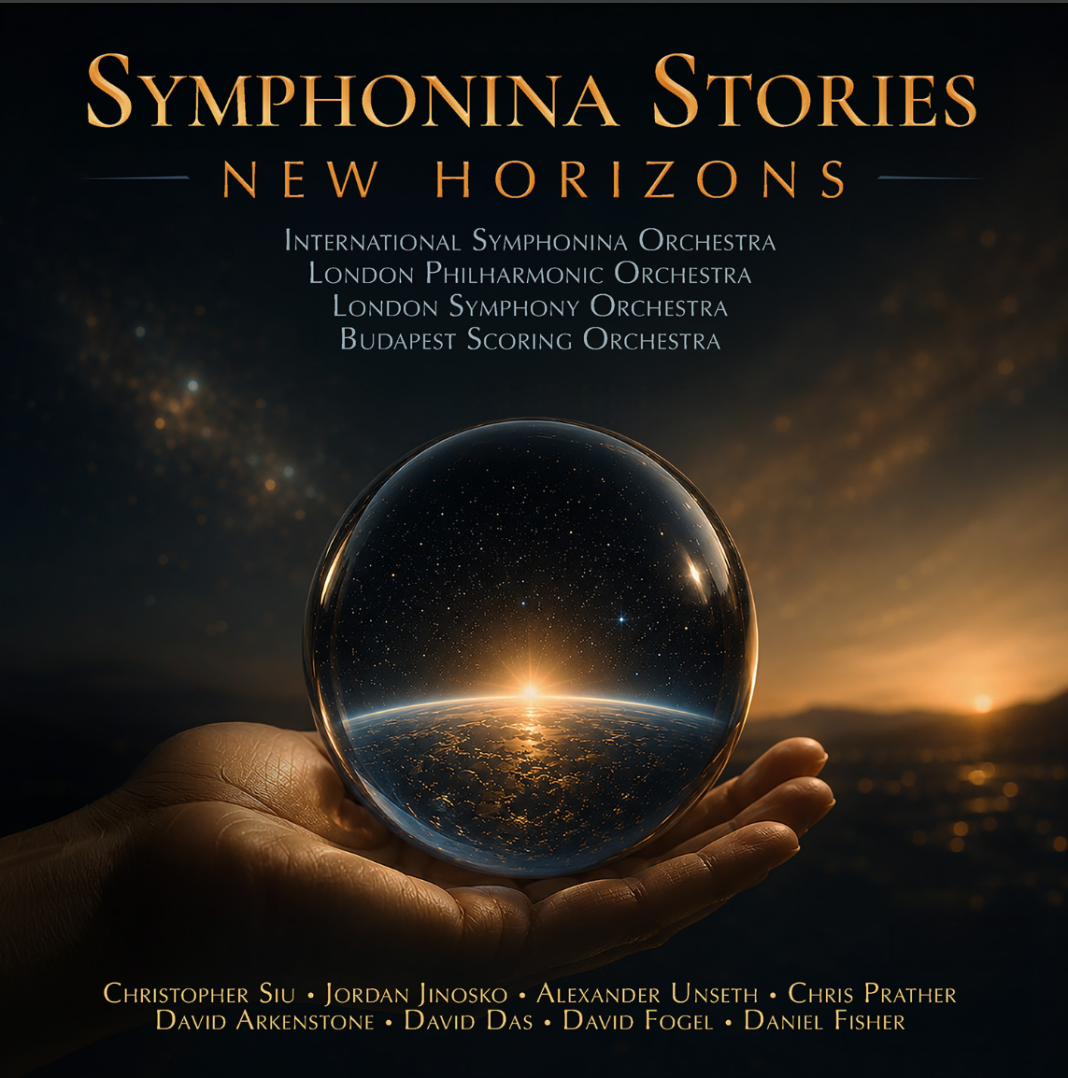
Their greatest catalog release, Symphonina Stories: New Horizons, is a colossal twenty-six-track album including eight separate symphoninas created by eight imaginative artists. World-class performance ensembles such as the Budapest Scoring Orchestra and the International Symphonina Orchestra bring these pieces to life. The album is a vast canvas of orchestral colors, dynamic range, and musical expertise across its twenty-six pieces, using only organic, natural instrumentation with no electronic augmentation.
New Horizons is an academic proof-of-concept and a very affecting listening experience throughout, Symphonina Stories. What makes this one stand out right away is its unwavering dedication to live, pure instrumental performance in the best possible acoustic spaces. The production captures the orchestra’s physical realism with impressive transparency, highlighting the tactile friction of horsehair drawn across the strings, the subtle breath control of solo woodwinds, the reverberant flare of low brass bells, and the complex harmonic resonance of percussion and solo keyboards. The composers featured here avoid repetitive textures, instead drawing on classical, romantic, impressionistic, and cinematic traditions, mixing these inspirations into fascinating musical worlds.
Siu: Symphonina No. 1 (Hope), Movement 2
The whole record is built on the synergy between the instrument families. The woodwinds give the story fluidity, subtle color shifts, and complex counterpoint. The brass section underpins dramatic climaxes, moving easily between dark brooding power and bright fanfares. The strings are the emotional motor, moving through broad lyrical melodies as readily as rapid-fire staccato beats. Concert percussion adds structural energy and delicate atmospheric highlights. Each composer arranges the music carefully so each group of instruments plays a clear and important part in the whole tapestry.
The musical voyage starts with Movement 1 of Christopher Siu’s Symphonina No. 1 (“Hope”) performed by the Budapest Scoring Orchestra. It begins with faint high violin tremolos that suggest a dawn haze, and gradually builds the acoustic architecture for the larger narrative. The main subject idea is stated by a solo oboe, with delicate counter-melodies in the clarinets, with the warm, reedy tone of the oboe. As the piece develops, the French horns introduce a lovely counter-subject, and the low brass are drawn in to enhance the rich harmony. The shift from the fragile woodwind solos to the full warmth of the orchestra is seamless, culminating in a steady timpani roll that builds anticipation for a sweeping crescendo when the first violins carry an upward melodic line, creating a sense of optimism and renewal.
Siu: Symphonina No. 1 (Hope), Movement 3
The tempo shifts to a reflective cadence as we move into Movement 2 of Siu’s Symphonina No. 1 (“Hope”). The movement is built on a subtle counterpoint between the solo flute and the major cello. The cello’s bottom register is grounded and introspective, with the flute responding in its higher register with bird-like arpeggiations. The violas and double basses give the melodic dialogue a quiet, constant pulse with pizzicato lines. Muted trumpets create a sorrowful timbre that matches low bassoons for a murky harmonic backdrop until the section settles into a peaceful, protracted string coda.
Siu’s Symphonina No. 1 (“Hope”) Movement 3 ends the opening trio with its propulsive rhythmic force and thematic success. It has a constant motion, with crisp spiccato string writing and forceful accents from the snare drum and cymbals. Trumpets make the most of the thick texture with victorious fanfares; trombones and tubas provide forceful bass lines. A mid-movement dynamic shift has the French horns singing over cascading harp glissandos, before the complete ensemble reassembles for a high-energy conclusion bolstered by tubular bells and full-orchestra chords.
Jinosko: Symphonina No. 3 (Of Fire and Water), Movement 1 [Gold]
Movement 4 begins with Jordan Jinosko’s Symphonina No. 3 (“Of Fire and Water”), Movement 1 [Gold], played by the Budapest Scoring Orchestra, directed by Peter Illényi. Through tone color and violent rhythmic shifts, the work pits elemental powers against one another. Fast, restless violin motifs and strong staccato marimba strikes generate dynamic energy. A liquid, flowing texture emerges from fluid, descending woodwind lines played in unison by piccolo, flute, and clarinet. These opposing acoustic aspects alternate quickly, creating dynamic friction until a sudden impact from the bass drum and low brass signals the convergence of themes, producing a dense auditory atmosphere in which swirling string passages clash with heroic brass shouts.
The suite continues with Movement 5 of Jinosko’s Symphonina No. 3, “Of Fire and Water”, Movement 2 [Fire], offering a blazing, powerful contrast. The movement is built on quick, syncopated chords in the cellos and double basses, highlighting the aggressive, biting quality of staccato brass. The French horns and trumpets trade quick fanfares over an unyielding bed of percussion, with timpani, snare drum, and piercing cymbal crashes. High woodwinds flutter in quick, flaming bursts over the thick low-end base, showcasing the orchestra’s ability to articulate rhythms with lightning speed and sheer musical strength.
Jinosko: Symphonina No. 3 (Of Fire and Water), Movement 2 [Fire]
Jinosko’s work on Symphonina No. 3 (“Of Fire and Water”) Movement 6 ends Movement 3 [Spirit]. A sublime, atmospheric feel runs throughout the movement, held together by long, sustained string pads and dreamy woodwind solos. A haunting tune is played on the cor anglais, then slowly passed to a sumptuous string ensemble playing with mutes. Soft tam-tam hits and delicate harp arpeggiations create an impressionistic ambiance that allows the work to ebb and flow between peaceful contemplation and expansive, soaring string climaxes that resolve the elemental struggle that went before into equilibrium.
Movement 7. Alexander Unseth, Symphonina No. 3, “Painted City,” Movement 1 [L’temps: Un Cirque]. Performed by the International Symphonina Orchestra. The piece uses fun syncopation and theatrical orchestration to convey the whimsical ambiance of a huge circus. The woodwinds are featured, with piccolo and bassoon sharing a comic lyrical battle, high against low. Violins bounce along in brilliant spiccato moments, then slide dramatically in glissandos. Xylophone, snare drum and triangle punctuate crisply and mechanically. The listener is kept on their toes by the fast switching between chamber-like solos and buoyant full-ensemble tuttis.
Jinosko: Symphonina No. 3 (Of Fire and Water), Movement 3 [Spirit]
Alexander Unseth – Symphonina No. 3 (“Painted City”) – Movement 8 Movement 2 [Church Mosaic] The arrangement is based on a large string section playing lush hymn-like prolonged chords. A single French horn plays a serious, broad theme suggesting architectural majesty and peaceful meditation. Halfway through the section an acoustic concert grand piano enters with rolling arpeggiations running between delicate flute and oboe sounds. The composition fades off quietly to a solo violin reaching its maximum register over a fading low double bass note.
Movement 9 is Alexander Unseth’s Symphonina No. 3 (“Painted City”), Movement 3 [A Bluebird’s Dream]. The composition features lyrical woodwind writing and a soaring flute theme that emulates the freedom of flight. The string ensemble creates a beautiful, shimmering background of music with gentle tremolos and subdued harmonics. Harp arpeggiations provide a dreamlike sheen to the movement, while low woodwinds, such as the bass clarinet, create delicate counter-melodies in the background, maintaining a pastoral, airy mood throughout.
Unseth: Symphonina No. 3 (Painted City), Movement 1 [L’temps: Un Cirque]
Movement 11: Chris Prather: Symphonina No. 1 (“Tales from Spooky Town”) – Movement 1 [Carriage Ride to Spooky Town] – International Symphonina Orchestra. The carriage begins to move to a mechanical clippety-clop rhythm of temple blocks, woodblocks and pizzicato cellos. The bassoon plays a leading part, with a cheerful, quirky tune in its mid register. Muted brass glissandos and sul ponticello string textures add an eerie character to the arrangement, while yet maintaining structural clarity. The brilliant xylophone lines provide skeleton clarity to the dramatic apex of the piece.
Prather’s suite ends with Movement 14, Symphonina No. 1 (“Tales from Spooky Town”), Movement 4 [Even Ghosts, Ghouls, and Goblins Sleep]. The mood turns into a dark lullaby, played on mild acoustics. Glissandi on the concert harp and delicate touches on the celeste suggest night falling over the fictional village. Long, warm chords played on muted French horns underlie a sweet melody delivered by solo alto flute and muted violins. The action fades into silence, interrupted by one last, soft chime strike.
Unseth: Symphonina No. 3 (Painted City), Movement 2 [Church Mosaic]
Movement 15: Budapest Scoring Orchestra, Conductor: Peter Illényi, Composer: David Arkenstone, Title: Symphonina No. 1 (“Dreams Carried on Fire”), Movement 2, Hollywood Independent Music Award Winner. The movement focuses on delicate dynamics and an ambient hue. Warm horn pads, gentle woodwind duets between flute and alto flute, and bowed crotales offer a faint metallic resonance. The string group plays softly, creating a muted pad of sound over which a solo violin takes center stage with a melodic, expressive, and dramatic line. It doesn’t peak heavily, but rather stresses subtle textures and calm emotional intensity.
Movement 17 foregrounds Movement 1 [Tin Pan Alley] from David Das’s Symphonina No. 1 (“Lenny and George Walk Into a Bar”). It tributes mid-century American symphonic jazz, opening with a concert grand piano playing stride-inflected chords against full orchestral backing. A single trumpet with a Harmon mute performs a soulful, bluesy tune over a drifting bed of low strings. The arrangement is a balancing act between the spontaneous expression of a jazz club and the accuracy of an orchestra, with some great moments from the clarinet and saxes.
Unseth: Symphonina No. 3 (Painted City), Movement 3 [A Bluebird’s Dream]
The first movement of David Fogel’s Symphonina No. 6 (“Flutissimo”) is Movement 20, which showcases a magnificent exhibition of virtuosic woodwind composition. The flutes are featured, playing fast, bird-like runs and complex staccato patterns across all registers of the instrument. The accompaniment is crisp and buoyant; it uses light string pizzicatos, delicate triangle hits and gentle horn chords, letting the solo flutes project easily through the acoustic space.
Fisher: Symphonina No. 3 (Runaway Dream Days), Movement 3
The record’s thorough highlight sequence ends with Movement 25, Daniel Fisher’s Symphonina No. 3 (“Runaway Dream Days”), Movement 3. The piece commences with a powerful rhythmic pulse in the violas and cellos, soon accompanied by emphasized brass lines. The song then accelerates, with soaring melodic lines, the full force of the strings behind them, and loud trumpet fanfares. Every element of the orchestra builds to the closing climax; snare drums and timpani sustain the driving pace, woodwinds play quick rising scales, and the brass section delivers a triumphant final statement. The entire record ends on a conclusive and acoustic note.
Finally, Symphonina Stories: New Horizons shows how the symphonina format is both artistically and practically appealing. By marrying concentrated compositional structures with world-class performing ensembles such as the Budapest Scoring Orchestra and the International Symphonina Orchestra, the Symphonina Foundation has produced a work that is approachable, emotionally rich and technically refined. It is a major addition to modern symphonic recording, and a deliberate, ambitious template for the future of composition within classical music.
For more songs like this, follow The Symphonina Foundation on Spotify, symphoninafyc.org